
In an era of constant digital stimulation and vibrant, often overwhelming screen aesthetics, there is a growing movement toward digital sobriety. The choice of a simple black abstract wallpaper is more than just a stylistic preference; it is a conscious decision to embrace minimalism, reduce visual clutter, and create a focused environment for productivity. Whether you are using a high-end smartphone with an OLED display or a professional workstation, the allure of a dark, abstract background lies in its ability to provide a sophisticated backdrop that allows your apps and widgets to take center stage without competing for your attention.
- The Psychology of Minimalist Dark Aesthetics
- Technical Advantages for OLED and AMOLED Screens
- Exploring Types of Simple Black Abstract Patterns
- Impact of Visual Noise on Productivity
- Choosing the Right Resolution and Aspect Ratio
- Conclusion
- Frequently Asked Questions
The Psychology of Minimalist Dark Aesthetics
The shift toward dark-themed interfaces is not merely a trend; it is rooted in how our brains process visual information. A simple black abstract wallpaper utilizes the concept of negative space to create a sense of calm and authority. In color psychology, black is often associated with power, elegance, and mystery. When applied to a digital workspace, these attributes translate into a feeling of stability and professional focus.
By stripping away complex imagery and bright colors, you reduce the cognitive load on your mind. When every time you minimize a window you are met with a chaotic image, your brain subconsciously processes that data, which can lead to micro-distractions. Embracing minimalism in your digital environment allows you to maintain a state of flow more effectively. This approach to design is often referred to as ‘digital decluttering,’ where the goal is to remove everything that does not serve a functional purpose.
Furthermore, the ‘abstract’ nature of these wallpapers ensures that the screen does not feel empty or sterile. By adding subtle geometric lines, fluid shapes, or organic textures, the wallpaper provides a sense of depth and artistry without the distracting specificity of a photograph. This balance between void and form is what makes a design focused on dark abstracts so timeless.
Technical Advantages for OLED and AMOLED Screens
Beyond the psychological benefits, choosing a dark aesthetic is a strategic move for users of modern hardware. If you own a device with an OLED (Organic Light Emitting Diode) or AMOLED screen, a black wallpaper is practically a utility tool. Unlike traditional LCD screens that use a backlight to illuminate every pixel, OLED technology allows individual pixels to be turned off completely.
When a pixel is displaying ‘True Black,’ it is essentially powered down. This leads to several significant advantages:

- Battery Efficiency: Since black pixels consume zero power, using a simple black abstract wallpaper can noticeably extend your battery life, especially on mobile devices where screen-on time is the primary drain.
- Infinite Contrast: The gap between the brightest highlight and the deepest black is absolute. This creates a striking visual pop, making colors in your apps and icons appear more vivid and saturated.
- Reduced Eye Strain: In low-light environments, bright wallpapers can cause ‘glare’ and lead to digital eye strain. Darker backgrounds reduce the amount of blue light emitted, making late-night browsing more comfortable for the eyes.
To maximize these benefits, look for wallpapers that offer ‘deep blacks’ rather than dark grays. The more true black pixels your wallpaper contains, the more oled efficiency you will gain.
Exploring Types of Simple Black Abstract Patterns
Not all black wallpapers are created equal. Depending on the ‘vibe’ you want to achieve, there are several sub-genres of abstract dark designs that cater to different tastes.
Geometric Minimalism
Geometric abstracts rely on clean lines, polygons, and mathematical symmetry. Think of thin, slate-gray lines intersecting on a pitch-black canvas or a subtle 3D isometric grid. These are ideal for professionals who want their desktop to feel organized, structured, and architectural. The precision of geometric shapes mirrors a disciplined mindset.
Fluid and Organic Forms
For those who find straight lines too rigid, fluid abstracts offer a more natural feel. This category includes representations of smoke, flowing ink, silk waves, or liquid metal. These designs introduce a sense of movement and grace. Because the transitions between light and dark are usually soft gradients, they provide a luxurious, atmospheric feel that is less about structure and more about emotion.
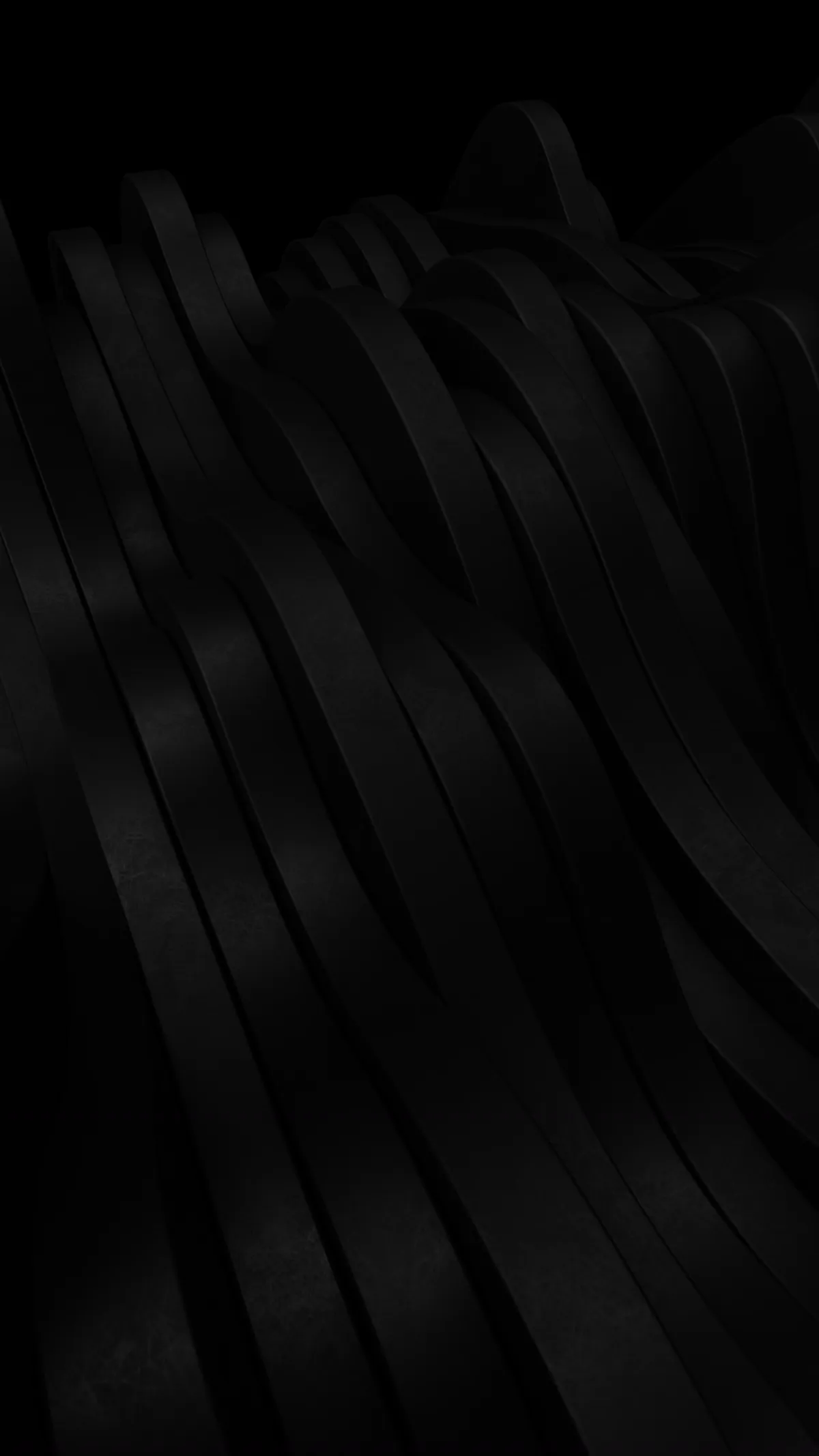
Textured and Material Abstracts
Textured wallpapers mimic real-world surfaces. Popular examples include brushed metal, carbon fiber, matte leather, or volcanic rock. These add a tactile quality to a flat screen, giving the illusion of physical depth. A matte black texture is particularly effective for reducing perceived screen reflections and adding a sophisticated ‘stealth’ look to a device.
Gradient and Atmospheric Depth
Gradients involve a smooth transition from a deep charcoal to a total black. This creates a ‘vignette’ effect that draws the eye toward the center of the screen. Atmospheric abstracts often incorporate a single accent color—such as a thin sliver of neon blue or gold—which breaks the monotony while maintaining the overall dark theme.
Impact of Visual Noise on Productivity
Visual noise refers to any unnecessary visual information that competes for your attention. In the context of a computer desktop, this includes busy wallpapers, cluttered folders, and excessive widgets. A simple black abstract wallpaper acts as a silencer for this noise.
When your background is neutral and dark, your brain stops ‘seeing’ the wallpaper and starts focusing exclusively on the task at hand. This is particularly useful for creatives, coders, and writers who need deep concentration. A high-contrast environment where the active window is the only bright element on the screen naturally guides the user’s focus toward the workspace, minimizing the temptation to wander visually across the screen.
Choosing the Right Resolution and Aspect Ratio
To ensure your abstract wallpaper looks professional and not pixelated, you must match the resolution to your hardware. A low-resolution image stretched across a 4K monitor will result in ‘banding’—those ugly, visible steps in a gradient—which ruins the minimalist effect.
- For 4K Monitors: Aim for 3840 x 2160 pixels. Ensure the image is saved in a lossless format or a high-quality JPG to avoid compression artifacts in the dark areas.
- For Smartphones: Look for aspect ratios like 19.5:9 or 20:9. Vertical abstract designs work best, as they allow the fluid patterns to flow naturally from the top to the bottom of the screen.
- For Dual Monitor Setups: Consider ‘span’ wallpapers that are ultra-wide (e.g., 7680 x 2160), allowing a single abstract shape to transition seamlessly across both screens.
When searching for the perfect image, prioritize ‘Vector’ art if possible. Vector-based abstracts can be scaled to any size without losing clarity, ensuring that the lines remain sharp and the blacks remain deep regardless of the screen size.
Conclusion
The choice of a simple black abstract wallpaper is a intersection of art, psychology, and technology. By reducing visual noise and leveraging the technical capabilities of modern screens, you can transform your digital device from a source of distraction into a tool of focus. Whether you prefer the rigid precision of geometry or the flowing grace of organic forms, a dark minimalist background provides a timeless elegance that complements any hardware and elevates the user experience.
Frequently Asked Questions
Do black wallpapers actually save battery life on all screen types?
No, they only save significant battery on OLED and AMOLED screens. On traditional LCD or LED screens, a backlight is always on regardless of the color being displayed, so a black image consumes roughly the same energy as a white one.
What is the difference between ‘True Black’ and ‘Deep Grey’ in wallpapers?
‘True Black’ refers to a hex code of #000000, which tells an OLED pixel to turn off completely. ‘Deep Grey’ still emits some light, meaning the pixel remains active, which slightly reduces battery savings and contrast.
How do I prevent ‘banding’ in dark gradient wallpapers?
Banding occurs when there aren’t enough colors to make a smooth transition. To avoid this, download images with a higher bit-depth (10-bit or 16-bit) or use formats like PNG instead of heavily compressed JPEGs.
Why are abstract patterns better than photos for productivity?
Photos contain recognizable objects that can trigger memories or thoughts, leading to subconscious distractions. Abstract patterns provide visual interest without offering a specific ‘story’ for the brain to follow, keeping your focus on your work.
What is the best file format for a dark minimalist wallpaper?
PNG is generally the best for dark wallpapers because it is a lossless format, meaning it preserves the smooth gradients and deep blacks without adding the ‘noise’ or artifacts often found in JPEG files.
Related posts:

One collection down, another calling: Blue Abstract Aesthetic Wallpaper: Elevate Your Digital Space is the closest companion to what you just viewed.
Bookmark this set for the next time your screen needs a new mood.
