
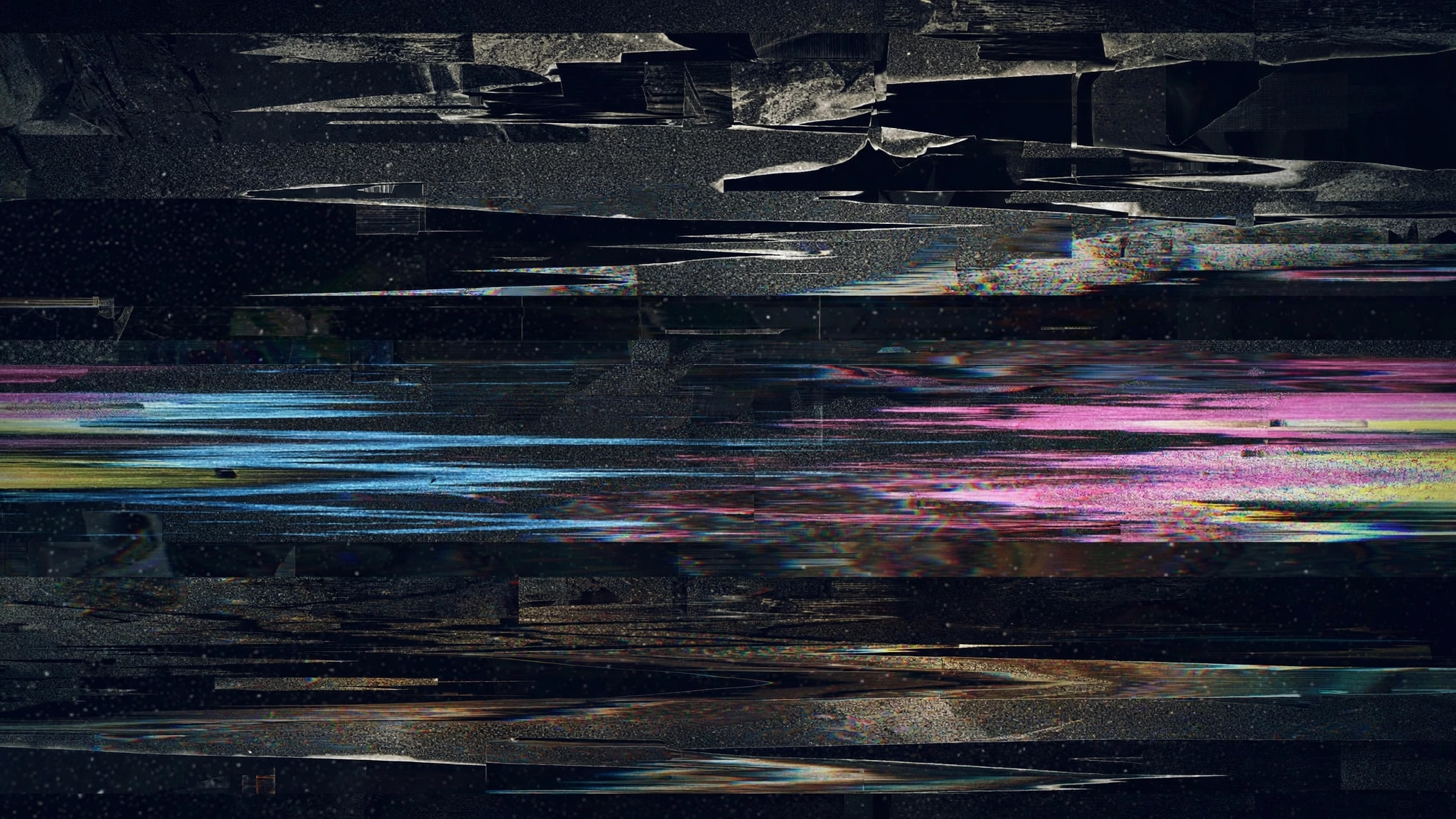
If you remember reaching for the tracking knob when the picture wobbled and the sound warbled, VHS tracking wallpapers answer why that malfunction still draws the eye, what each band and smear actually was, where the artifacts came from inside the tape system, when a fault became a style, who keeps the aesthetic alive today, and how artists compose with damage without turning a screen into noise. Misadjusted tracking produced horizontal bands of static, colors bleeding sideways, and a picture folding over itself at the edges, and what was once a failure to fix is now rescued as abstract art. The result is nostalgia rendered as texture, with a human pulse that sharper digital errors rarely match.
The aesthetic hits differently than digital glitch, where errors are sharp and blocky, because analog distortion is soft and smeary. Tracking errors bleed rather than break, as they smudge, wobble, and dissolve across the image. On a wallpaper, that softness reads as warmth, and the choice sits naturally near a retro purple abstract drawing complete guide for readers who like retro color handled as a deliberate design language.
Anatomy of a Tracking Error
A mistracked image fails in specific and recognizable ways, and each artifact has a physical cause in the format described by the history of VHS itself. The tracking band comes from the video heads misreading the helical scan tracks, the bleed from the limited bandwidth of the color-under system, and the dropouts from literal gaps in the magnetic coating. Knowing the causes deepens appreciation, because these are signatures of a specific technology rather than random filters.
Wallpaper artists who understand the artifacts reproduce them faithfully, while those who do not produce generic retro noise that feels hollow. The artifacts function like a fingerprint for the format, distinctive once you learn to read them.
The core vocabulary of analog distress is small, but each element changes the composition in a different way:
- The tracking band, a horizontal stripe of noise that rolls slowly up or down while the picture is displaced sideways within it
- Chroma bleed, where colors smear horizontally beyond their boundaries and reds trail into the dark like watercolor in rain
- Edge foldover, which curls the borders of the image inward as the picture folds over itself
- Dropouts, which speckle the frame with white flecks where the oxide failed
- Vertical roll, where the picture slides upward in a loop and the composition seems unable to sit still
The rolling band is the star of the genre, often frozen mid-roll in wallpaper form as a stripe of displaced imagery cutting across an otherwise calm composition. Chroma bleed works as a color treatment, with edges softened and hues trailing so the whole image feels slightly drunk.
From Malfunction to Medium
The journey from error to art follows a familiar path, beginning when the artifact is a problem to be fixed, hence the tracking knob. As the technology ages, the artifact becomes a signature that marks footage as authentically of its era. Finally, artists adopt it deliberately, the malfunction becomes a medium, and VHS tracking is now as established an aesthetic as film grain, with its own conventions and connoisseurs.
What distinguishes tracking aesthetics from other retro styles is their specificity, because they evoke the medium itself, the tape, the heads, and the fragile mechanical miracle of magnetic video. They are nostalgia for the process, not just the picture. That focus gives the wallpapers a tactile quality that display-only or print-only retro references do not quite share, a quality also felt in the period mood of a vintage blue abstract design guide to mastering timeless aesthetics.
There is a reason analog distortion feels warm while digital glitch feels cold, and it lies in continuity. Analog errors are continuous, as they smear, fade, and show attack and decay like a musical note, while digital errors are discrete, as they snap, block, and quantize. The human visual system reads continuity as organic and discreteness as mechanical, which is why tracking wallpapers feel like memories while datamosh feels like machinery, though both remain valid aesthetics at different emotional temperatures.
Composing With Controlled Damage
The art of tracking wallpapers lies in restraint, because a little distortion reads as authentic texture while too much becomes unusable noise. One band or a whisper of bleed lets the image wear its history lightly, while excess overwhelms any composition beneath. The best examples treat tracking as seasoning, enough to flavor the image and never enough to spoil it.
Many designs build the composition around the artifact itself, using a calm gradient or soft abstract field as the base while the tracking band cuts through like a horizon and gives the image structure. Others go full abstraction, with no underlying image at all, just bands, bleed, and noise composed as pure pattern.
Tracking wallpapers also inherit the distinctive color science of the format, with slightly crushed blacks, reds that bloom, and a general softness that flatters everything it touches. Artists lean into those tendencies, building palettes around deep blues that go almost black, skin-tone-adjacent ambers, and the particular magenta of overdriven chroma. It is a palette that feels like memory because, for a generation, it literally was the color of memory in every home movie, rented tape, and late-night recording.
Tracking Errors in Contemporary Culture
The tracking aesthetic has escaped nostalgia to become a living design language, used in music videos to signal rawness and by fashion brands for anti-polish credibility. Interface designers borrow its bands for loading states and transitions, and it has become shorthand for authenticity in an age of overproduction, the visual equivalent of a crack in the voice. As wallpaper, choosing tracking artifacts is choosing imperfection as identity, a small rebellion against the tyranny of the flawless render.
Interestingly, tracking nostalgia now spans generations who never touched a VCR, for whom the artifacts are discoveries rather than memories, a texture language learned from media rather than life. This second-hand nostalgia is no less real, because the aesthetic works through genuine beauty and not merely through remembrance. The tracking band does not need a particular childhood to be moving, since it only needs a screen and a moment of attention.
The tracking knob is gone, because no modern format has one, but the gesture survives in these wallpapers as the desire to adjust, to coax clarity from noise, and to find the image inside the interference. VHS tracking wallpapers are love letters to imperfection and reminders that the most human technologies are the ones that fail interestingly. The picture may wobble, but the feeling remains rock steady, and that steadiness is exactly why the wobble still belongs on a screen.
Related posts:


If this set speaks to you, Retro Purple Abstract Drawing: A Complete Guide continues the retro-art conversation in a new direction.
Share this page with a fellow art lover looking for their next wallpaper.

