
The allure of the abstract geometric pattern lies in its ability to communicate complex emotions and structural order without relying on literal representation. From the intricate mosaics of ancient civilizations to the sterile precision of modern minimalism, geometry has served as the universal language of visual composition. By stripping away the noise of the physical world, these patterns focus on the raw interaction between line, shape, and color, creating a sensory experience that is both intellectually stimulating and aesthetically pleasing.
- The Psychology of Geometric Shapes
- Influential Movements in Geometric Art
- Applications in Modern Graphic Design
- Integrating Geometry into Interior Spaces
- Technical Principles for Creating Patterns
- Conclusion
- Frequently Asked Questions
The Psychology of Geometric Shapes
Every line and angle in an abstract geometric pattern triggers a subconscious psychological response. Understanding these triggers allows designers to evoke specific moods and direct the viewer’s attention with mathematical precision. The interplay of these forms creates a visual rhythm that can either soothe the mind or energize the spirit.
Circles and ellipses often represent unity, wholeness, and infinity. Because they lack sharp edges, they are perceived as welcoming and inclusive, making them ideal for designs emphasizing community or organic flow. In contrast, squares and rectangles evoke stability, reliability, and professionalism. Their right angles suggest a sense of order and boundaries, which is why they dominate corporate branding and architectural layouts. To explore more about modern design principles, one must look at how these basics combine.
Triangles are perhaps the most dynamic of all shapes. Depending on their orientation, they can signify growth, direction, or tension. An upward-pointing triangle suggests ambition and stability, while an inverted one can create a sense of precariousness or urgency. When these shapes are repeated in a tessellation, they create a complex web of energy that guides the eye across the canvas, ensuring that the viewer remains engaged with the composition.
Influential Movements in Geometric Art
The evolution of geometric abstraction is not a straight line but a series of overlapping movements that redefined how we perceive space and form. The Bauhaus school in Germany was pivotal, championing the idea that “form follows function.” By utilizing primary colors and basic shapes, Bauhaus artists stripped art down to its essential components, bridging the gap between fine art and industrial design.
Following this, the Art Deco era introduced a more opulent approach to geometry. Characterized by zigzags, sunbursts, and stepped forms, Art Deco used symmetry to convey luxury, glamour, and the technological optimism of the early 20th century. This style proved that geometric patterns could be both rigid and extravagant, blending mathematical precision with decorative flair.
In the mid-20th century, Op Art (Optical Art) pushed the boundaries of perception. Artists like Victor Vasarely used high-contrast colors and precise geometric repetitions to create illusions of movement, depth, and vibration. Op Art demonstrated that an abstract geometric pattern is not static; it is a living interaction between the artwork and the human retina, often causing a physiological reaction in the observer.
Applications in Modern Graphic Design
In the digital age, geometry is the backbone of user experience and brand identity. The shift toward flat design has seen a resurgence of geometric simplicity, as it ensures clarity and scalability across various screen sizes. A well-constructed geometric logo is timeless because it relies on proportions rather than trends.
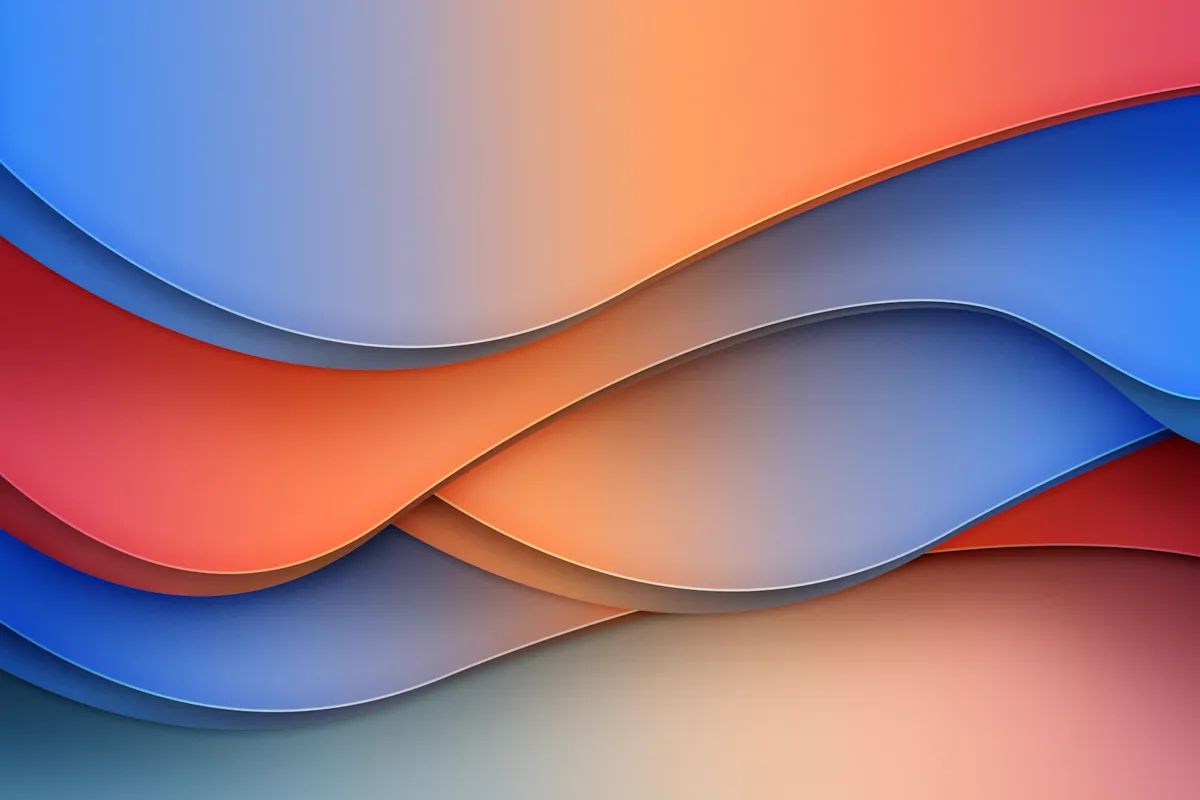
Graphic designers use vector graphics to maintain the absolute precision required for geometric work. By manipulating anchor points and paths, they can create complex fractal patterns that repeat infinitely without losing quality. This mathematical approach allows for the creation of sophisticated backgrounds that add depth to a layout without distracting from the primary content.
Furthermore, the use of negative space within geometric compositions is a powerful tool. By strategically placing shapes, designers can create “hidden” imagery or a sense of openness that prevents the design from feeling claustrophobic. The balance between filled and empty space is what transforms a simple arrangement of shapes into a professional piece of visual communication.
Integrating Geometry into Interior Spaces
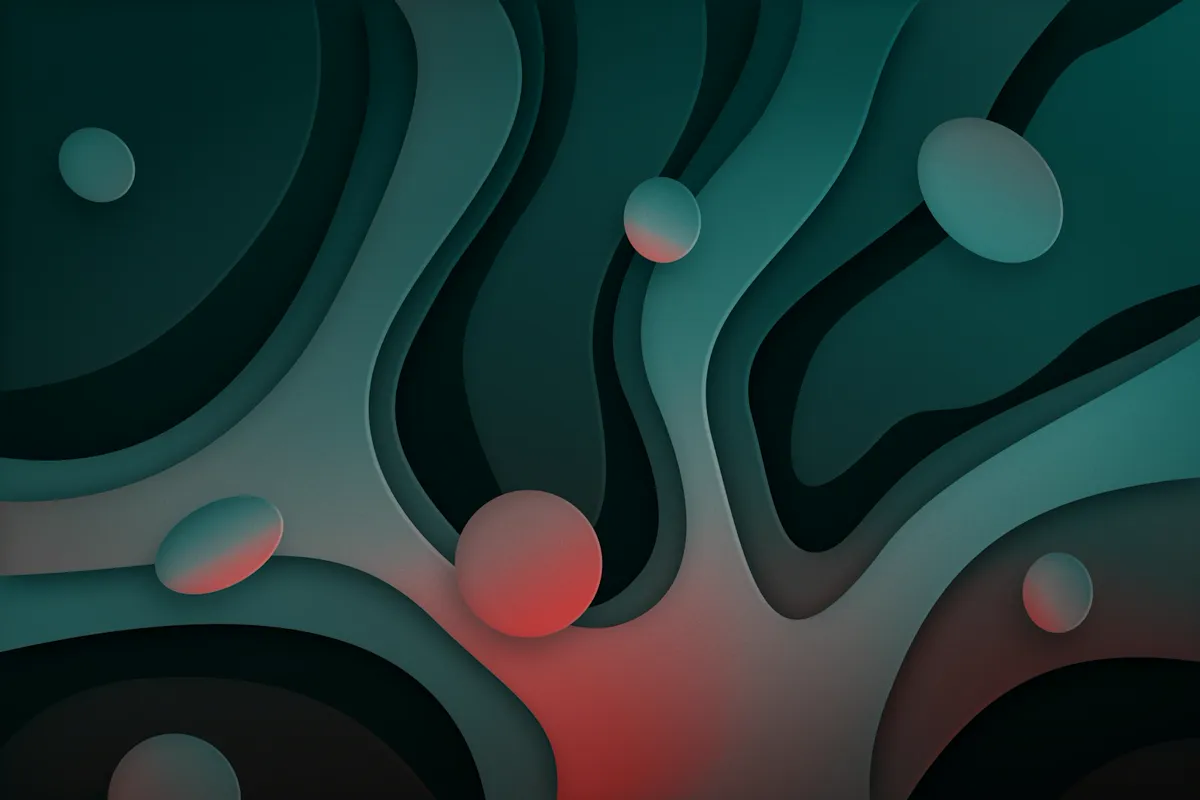
Bringing abstract geometric patterns into a physical environment requires a careful balance of scale and contrast. When applied to interior design, geometry can be used to manipulate the perceived dimensions of a room. For instance, vertical stripes or elongated polygons can make a ceiling appear higher, while horizontal patterns can widen a narrow hallway.
Statement walls featuring bold geometric murals act as a focal point, drawing the eye and defining the purpose of a space. However, the key to success is contrast. If a room is filled with angular furniture, incorporating circular or curved geometric patterns in textiles or rugs can soften the atmosphere and create visual harmony. This balance prevents the environment from feeling too clinical or rigid.
Materiality also plays a role in how geometry is perceived. A geometric pattern etched into wood feels warm and organic, whereas the same pattern printed on polished acrylic feels futuristic and cold. By pairing mathematical motifs with natural textures like linen, wool, or stone, designers can create a sophisticated juxtaposition that feels both modern and grounded.
Technical Principles for Creating Patterns
Creating a professional abstract geometric pattern requires more than just placing shapes randomly. It involves an understanding of symmetry, rhythm, and proportion. The most successful patterns often employ a grid system, which provides a hidden structure that the human brain perceives as “correct” or “balanced,” even if the final result looks chaotic.
The Golden Ratio (approximately 1.618) is frequently used to determine the spacing and sizing of elements. By following this proportion, artists can create compositions that feel naturally pleasing to the eye, mimicking the patterns found in nature, such as the spiral of a shell or the arrangement of leaves. This connection to the natural world is why certain geometric abstractions feel more “organic” than others.
Color theory is the final layer of complexity. Using complementary colors (opposites on the color wheel) can make a geometric pattern pop and feel high-energy, while analogous colors create a more serene, cohesive look. Gradient fills and overlapping transparencies can add a 3D effect, transforming a flat 2D plane into a layered architectural space.
Conclusion
The abstract geometric pattern is far more than a decorative tool; it is a sophisticated method of visual storytelling. By leveraging the psychological impact of shapes, the legacy of art movements, and the precision of mathematical proportions, creators can evoke specific emotions and organize information efficiently. Whether in a digital interface, a brand logo, or a living room wall, geometry provides the structural integrity that allows creativity to flourish without descending into chaos.
Frequently Asked Questions
What is the difference between geometric and organic patterns?
Geometric patterns are characterized by precise lines, mathematical shapes (like circles and triangles), and often follow a strict grid or symmetry. Organic patterns are fluid, irregular, and inspired by nature, such as the curves of a leaf or the flow of water, lacking the rigid predictability of geometry.
How do I choose the right color palette for a geometric design?
The choice depends on the intended mood. For a bold, energetic feel, use high-contrast complementary colors (e.g., blue and orange). For a sophisticated and calming effect, opt for a monochromatic or analogous palette (e.g., different shades of teal and green).
Can geometric patterns make a small room feel larger?
Yes, if used correctly. Patterns with vertical lines or shapes that draw the eye upward can create the illusion of height. Similarly, a light-colored geometric wallpaper with a subtle, repeating small-scale pattern can make walls feel like they are receding, opening up the space.
Which software is best for creating abstract geometric art?
Vector-based software is the gold standard. Adobe Illustrator is the industry leader due to its precision tools, but Affinity Designer and Inkscape are excellent alternatives. For those interested in algorithmic or generative geometry, tools like Processing or Grasshopper are highly recommended.
What is a tessellation in geometric art?
A tessellation is a pattern created by repeating a single geometric shape (or a set of shapes) so that they fit together perfectly without any gaps or overlaps. This creates a continuous, interlocking surface often seen in tile work and complex mathematical art.
Related posts:
If this set speaks to you, Smoke Silver Abstract Canvas: Elevating Modern Interior Design continues the abstract-art conversation in a new direction.
Pass this link to someone who appreciates bold, abstract design.
